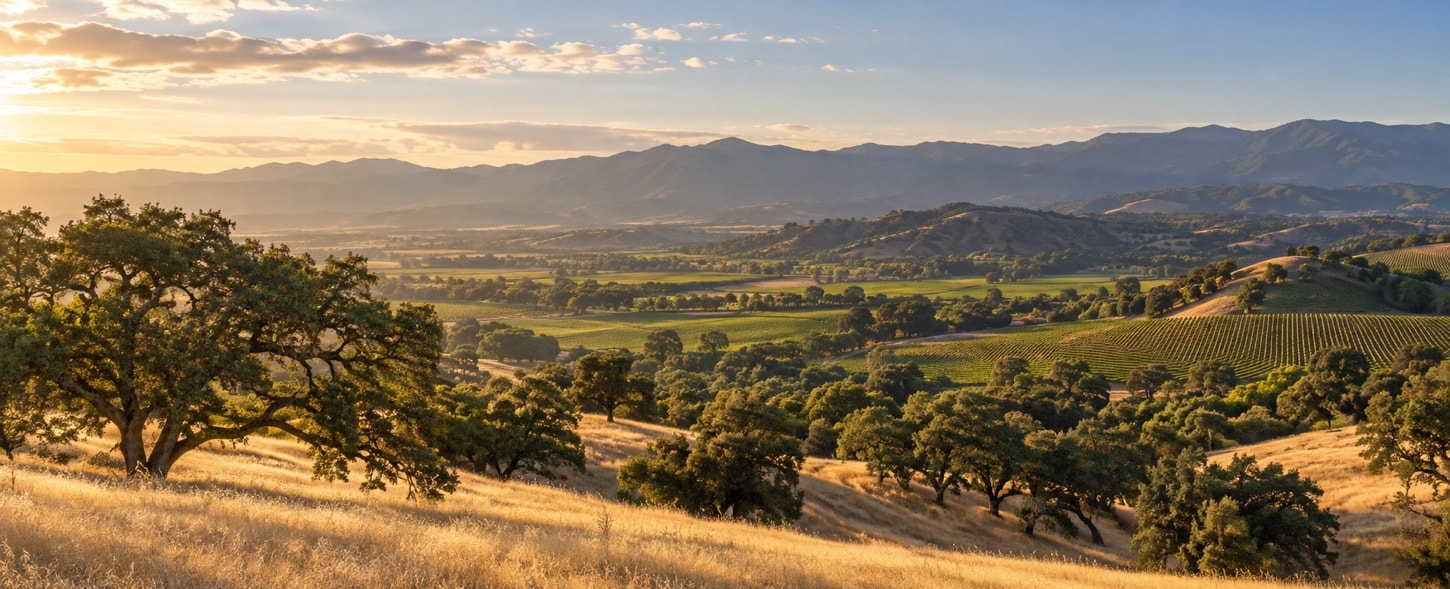
A wine-country day can look short on a map and still become crowded. Roads are rural, tasting takes time, and the distance between a village room and a vineyard setting changes the rhythm. The best plan is deliberately selective: one geographic cluster, a real meal, water throughout the day and a safe way back.
Choose the shape of the day
A town-based day keeps movement simple. Los Olivos offers a compact center where visitors can park and walk, while Solvang and Buellton can anchor other combinations of tasting, food and browsing. A countryside day is different. It involves longer stretches on two-lane roads, fewer spontaneous walking options and more attention to travel time.
Do not combine every district simply because they share the Santa Ynez Valley name. Western roads toward Sta. Rita Hills feel cooler and more exposed to marine air; the central corridor area around Los Olivos and Ballard has its own pattern; the eastern reach toward Happy Canyon becomes warmer and more open. Pick one chapter and read it well.
How tasting works
Formats vary, and operating details change. Some settings are oriented around standing at a counter, others around a seated flight or a longer conversation. Confirm access directly before travel, especially when the route leaves town. Never rely on an old itinerary for hours, reservations or road conditions.
Taste with curiosity rather than speed. Compare two wines, ask how their vineyard locations differ and take notes if that helps memory. Water and food are part of the plan, not an afterthought. If anyone in the party is driving, that person remains sober for the entire route.
Read the seasons
Spring often brings green hills and softer light. Summer can begin cool and warm quickly inland, with long afternoons and busy roads. Harvest changes the working tempo of wine country in late summer and autumn. Winter is quieter, with shorter daylight and the possibility of rain turning a scenic back road into a slower drive.
Season also changes what to carry. Sun protection and water belong in the car throughout the warmer months. A layer matters whenever evening follows a warm inland afternoon. On wet days, keep the plan closer to town and allow more braking distance on winding roads.
Build in the return
A tasting route is not complete until the last leg is settled. Arrange a driver or transportation before departure, keep the pickup location clear and avoid assuming that a ride will be readily available on a remote road. If cycling, do not mix riding with alcohol; make wine and the long ride separate days.
For the geography behind the glass, read the valley's appellations. For food planning, continue to Eating in the valley. The most satisfying day often ends earlier than expected, with enough light and attention left to enjoy the road home.