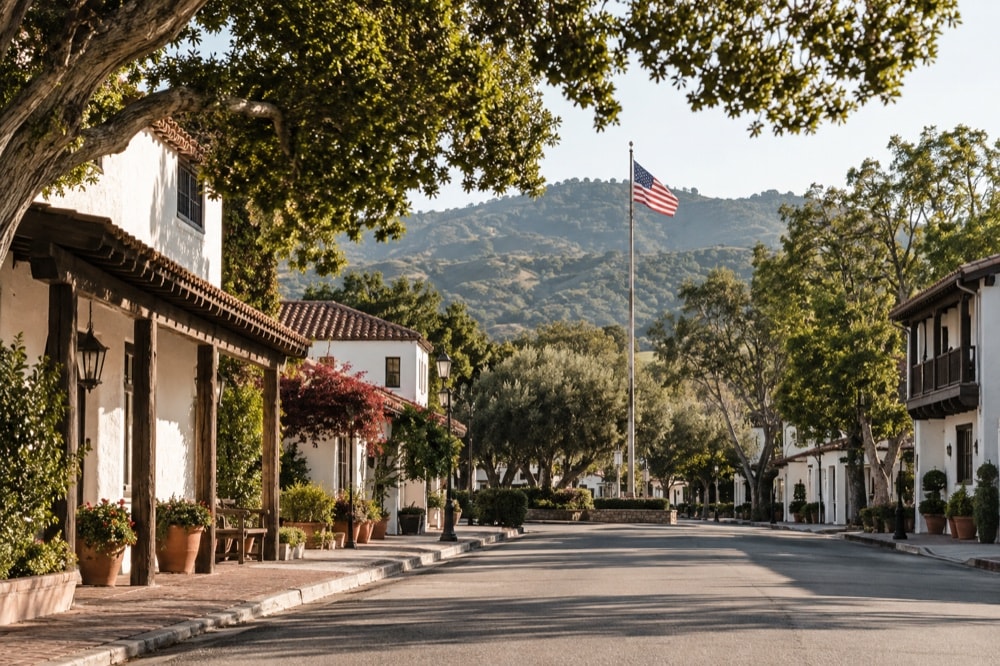
The Santa Ynez Valley keeps time through landscape. Rain turns hills green, spring growth softens ranch country, summer brings long bright evenings, and autumn gives vineyards a different color and tempo. Community celebrations, agricultural traditions and outdoor performances sit within that larger cycle. This page describes the enduring pattern rather than publishing a calendar that can go stale.
Winter: green hills and quieter roads
Winter is the valley's visual reset. When rain arrives, slopes that were tawny in late summer can become intensely green. Cool mornings suit village walks and museum time, while clear afternoons can be excellent for a drive through oak country. Storms may affect roads and outdoor access, so check conditions on the day rather than assuming California means dry weather.
Holiday traditions are especially visible in Solvang, where Danish-inflected streets give seasonal lights and gatherings a distinctive setting. The exact program changes. Treat the atmosphere as the reason to visit, then consult current public notices if a particular gathering matters to the trip.
Spring: growth, wildflowers and longer days
Spring joins green landscapes with more daylight. Roads through Ballard, Los Olivos and Santa Ynez reveal working fields, young vines and wildflowers when rainfall has supported them. It is a natural season for cycling, walking and open-air meals, though warm inland afternoons can arrive earlier than coastal visitors expect.
Local heritage, equestrian life and food traditions often shape recurring spring gatherings. They are expressions of ranch and agricultural culture, not fixed attractions. Verify dates, access and road impacts before planning around one.
Summer: early starts and evenings outside
Summer favors a split-day rhythm. Use cooler morning hours for trails or a rural-road ride, rest during the warmest part of the afternoon, and return outside as the light lengthens. Shade, water and realistic distances matter. The valley sits inland of the coast, so conditions can feel very different after crossing the mountains.
Outdoor theater has a lasting place in Solvang's cultural year, with PCPA summer productions associated with the open-air Solvang Festival Theater. Programming, performance nights and admission are variable; consult the presenting organizations directly instead of relying on an old itinerary.
Autumn: harvest color and changing light
Autumn draws attention to agriculture. Vineyard activity, grape harvest and seasonal menus make the connection between land and table especially easy to see. Danish Days is a recurring expression of Solvang's cultural heritage during this part of the year. Its program varies, so use the tradition as context and verify the current details separately. The days shorten, mornings may cool, and golden hills can take on deeper tones late in the day.
Harvest language can make the valley sound like one continuous festival, but ordinary working days are part of the appeal. Leave space for a quiet road, a town walk and a meal chosen by appetite rather than by a program. If you plan to taste wine, keep the route short and settle transportation first.
How to use a changing calendar
Search for current information close to the visit, then confirm it again before departure. Prefer the organizer or public venue over copied listings. Check whether an activity affects parking, road access or opening hours, and build an alternative that still makes the day worthwhile. A season should enrich the trip, not turn it into a race between start times.
For a flexible route, use the trip-planning framework. For weather-aware walking and riding, read Long days outside.